
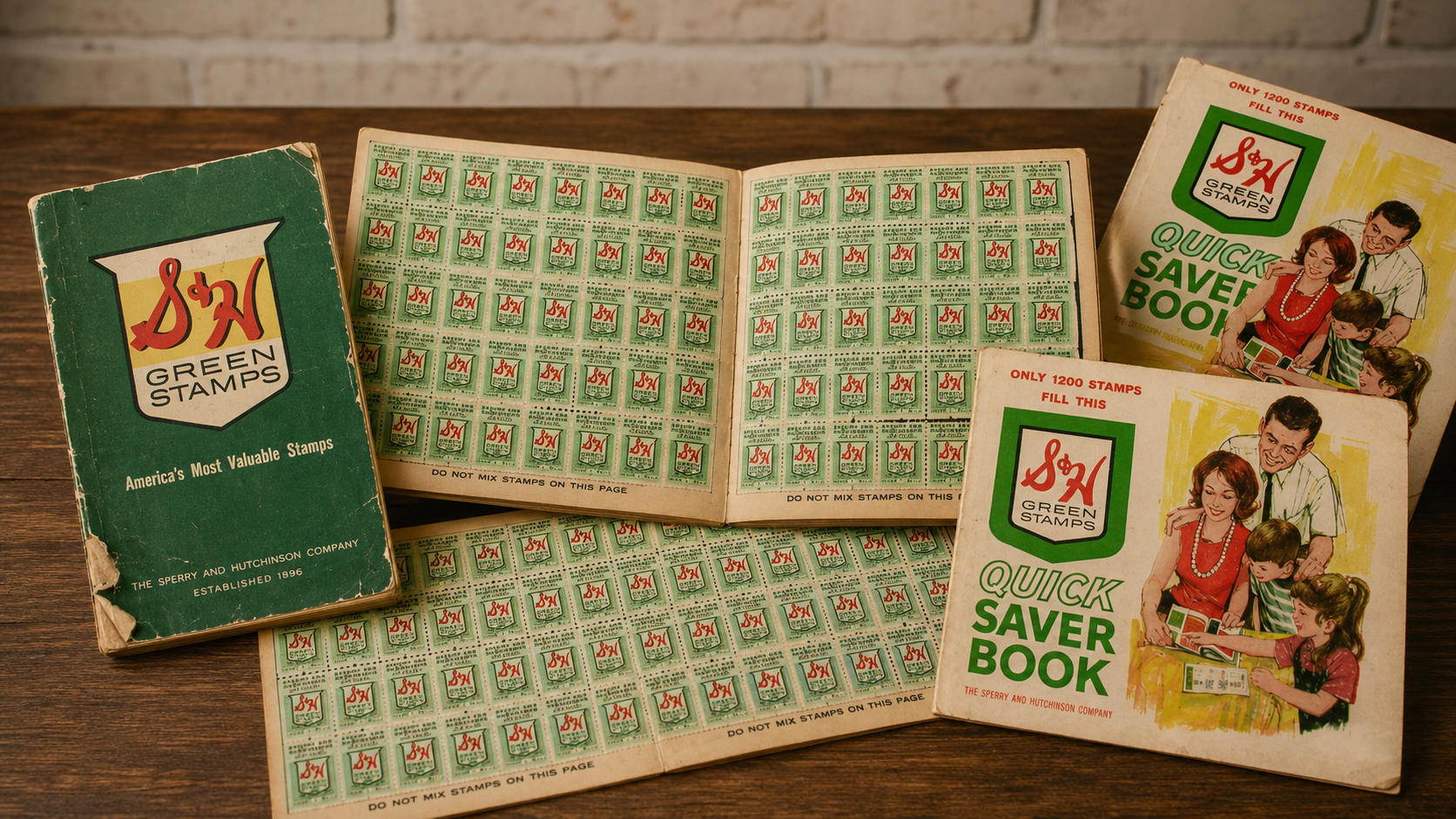
When we collect our hurts like emotional trading stamps.
If you grew up in this part of Texas before 1980, you probably remember S&H Green Stamps. Every time you checked out at the grocery store the cashier would count out a strip of little green stamps based on how much you spent. You’d take them home, wet the back of each one with a sponge, and paste them into a book. And once you had filled a stack of books you could take them down to the redemption center and trade them in for something like a toaster or a lamp. Maybe, if you’d been collecting long enough, you could get something really nice.
It was a whole system built on one simple idea: keep collecting, and eventually you cash in. Many of us are still running that same kind of system, just with something a lot more dangerous than stamps. We do it with hurt.
Emotional Trading Stamps
Here’s what I mean. Somebody wrongs us — a sharp word, a broken promise, a slight we probably weren’t even supposed to notice, and we don’t throw it away. We store it. Emotionally, we paste it into a book. Another offense, another stamp. We keep collecting, keep filling pages, because we’re saving up for something. We’re waiting for the day the book is full enough to cash in. When that happens, we are finally going to make them pay, or finally get to feel justified in how angry we are.
We don’t call it that, of course. We call it “remembering.” But underneath all of that is the same transaction the green stamps company ran for eighty years: collect enough, and eventually you redeem it. The problem is what we’re actually trying to redeem it for.
With green stamps, you were saving up for a toaster. With emotional trading stamps, you’re saving up for permission to explode, permission to cut someone off, permission to say the thing you’ve been holding back, permission to finally stop being the bigger person. And just like a stamp book, each new page adds weight. A full book is heavy. A heart that’s been collecting offenses and filling books for years is heavier still.
The Redemption We’re Actually After
What we’re really doing is keeping score so that when we finally cash in, we don’t have to feel guilty about it. A full stack of books gives us cover. “Look how much I put up with. Look how long I waited. I’ve earned the right to retaliate.”
That might feel true in the moment. But it isn’t peace. It’s just a slower, more respectable-looking version of revenge. And the tragedy is, most of the people we’re collecting stamps on don’t even know our book exists. They said the thing, did the thing, moved on with their lives, while we’ve been quietly filling pages for months waiting for a redemption day that only exists in our own head.
Closing the Book
I need to be clear about something at this point. The answer is not just pretending we were never hurt. Pretending isn’t peace either, it’s just denial with better manners. Real people really do wrong us, and minimizing that isn’t honest or healthy. But there’s a difference between acknowledging a hurt and storing it. One deals with the offense honestly then lets it go. The other keeps that offense on record, on purpose, for later use.
Scripture doesn’t tell us to pretend the hurt wasn’t real. It tells us to stop keeping the account. Love, Paul writes, “keeps no record of wrongs” (1 Corinthians 13:5). Not because the wrongs didn’t happen, but because a kept record only accomplishes one thing: it keeps you tied to the moment you got hurt, collecting interest on a pain you could have set down a long time ago.
It’s worth asking, whose books are you still filling? Whose offenses have you been quietly collecting, saving up for a day of reckoning that’s never actually going to bring you what you think it will?
You don’t have to wait for the book to fill up. You can decide to close it today; not by pretending it’s empty, but by finally putting it down. And here’s the part worth remembering — you were never intended to carry it in the first place. The weight of that heavy book of recorded wrongs was never supposed to be your responsibility (Rom. 12:19). Putting the book down doesn’t mean the other person wins. It means you finally get free of the burden: free of the weight, free of the waiting, free to stop living your life around a redemption day that might never come. Closing the book brings you peace, and it allows you to be more present for those you care most about.
If this resonated with you, I invite you to join us this month at First Baptist Church of West as we work through a series on peacemaking called “Peacemakers: Finding Peace in a World That Wants to Fight”


Leave a Reply